Traditional LMS vs AI LXP: Key Differences, Capabilities, and Why AI Wins
Compare LMS and AI learning experience platform tools and see why AI delivers smarter, personalized skill development for modern teams.
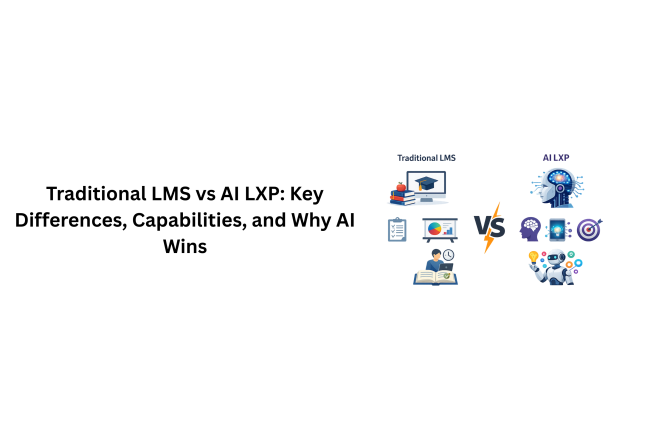
Learning management systems (LMS) were the standard corporate training option for many years. They assisted organisations with tracking completion, uploading courses, and maintaining compliance. That was sufficient at the moment.


However, the expectations of today's workforce are different. Workers desire learning that is rapid, individualised, and relevant. Companies expect quantifiable skill growth, not just course completion checklists.
Many businesses are now investigating AI learning experience platforms, also known as AI LXPs, as a result of this change. Although training is supported by both systems, their functions are rather dissimilar. Leaders may invest in technology more wisely if they are aware of these distinctions.
What a Traditional LMS Does Well
The main purpose of a traditional LMS is administration. It assigns courses, plans training sessions, and keeps track of who has finished what. This makes it helpful for companies that rely heavily on compliance and where paperwork is important.
An LMS can effectively manage the delivery of required policies, onboarding materials, or certifications. It guarantees uniformity among teams and keeps documentation neat.
The majority of LMS platforms, however, take a one-size-fits-all stance. Regardless of their role, experience, or skill set, everyone gets the same content. This frequently results in low engagement over time. Workers take classes because they are required to, not because they find them beneficial.
The restrictions become apparent at that point.
What an AI Learning Experience Platform Changes
An AI learning experience platform adopts a different strategy. It puts the learner first rather than the administration of the course.
With the help of data analytics and artificial intelligence, the platform makes personalised content recommendations. It automatically finds skill gaps, analyses behaviour, and recommends pertinent resources. Learning becomes ongoing, flexible, and personalised.
Instead of promoting lengthy training courses, it provides short lectures, videos, essays, and practical experience. Workers may pick up new skills while working, which is less disruptive and seems more natural.
This change makes learning an opportunity rather than a duty.
Key Differences in Capabilities
When you examine how the two systems function on a daily basis, the differences between them become evident.
-
An LMS tracks attendance and completion. An AI learning experience platform tracks skills and growth.
-
An LMS delivers assigned courses. An AI-driven platform recommends what’s most useful next.
-
An LMS is largely reactive. An AI-powered system is proactive, predicting needs before gaps become problems.
This distinction is important to business executives. Performance improvement is not guaranteed by completion reports. Skill intelligence does.
Why AI Wins for Modern Enterprises
Learning is about business outcomes for CEOs and decision-makers, not merely training. Growth is directly impacted by better teams, quicker onboarding, and flexible workers.
AI-powered systems are unique in this regard. They offer real-time insights into worker capacities, minimise manual administration, and scale effortlessly across huge workforces. Leaders are able to determine which abilities are strong, which require improvement, and where to make the next investment.
Additionally, an AI learning experience platform maintains employee engagement, which boosts morale and retention. When people feel like they're growing, they stay longer.
Conclusion
Particularly for basic course management, traditional LMS platforms continue to have a place. However, they frequently fall short for companies looking to create flexible, future-ready teams.
A platform for AI learning experiences provides measurable skill growth, smarter insights, and personalization, exactly what contemporary businesses require. AI is unquestionably at the forefront if actual advancement is the aim rather than rote training.
What's Your Reaction?